Pei Liu
I am a Postdoc research fellow at the school of computer science, HNU. I am fortunate to be advised by Prof. X. Zeng. Prior to that, I had a wonderful four-year journey at UESTC and got my Ph.D. degree in Jun. 2025 under supervision of Prof. L. Ji. I obtained my B.E./M.S. degree in computer science at UESTC in 2017/2020.
Research Interest: My interests cover many aspects of machine learning and its applications in biomedicine.
- Machine Learning: 1) Multiple Instance Learning (MIL), particularly the new issues posed by weak supervision; 2) Image Generation, such as unpaired image-to-image/text-to-image translation; 3) Bayesian Inference and Uncertainty Estimation, with more attention on NN-based approaches; 4) Survival Analysis, discrete or continuous survival modeling approaches.
- Computational Pathology (CPATH): utilizing efficient deep learning methods and explainable tools to unlock the potiential of pathology images for 1) precise and personalized cancer diagnosis, prognosis, and treatment and 2) other scientific applications, such as virtual spatial omics from histology.
- Virtual Cell: building the Universal Virtual Cell-Signaling Model, a foundation model capable of predicting how any cell in any state changes in response to external signals, including the changes of multi-omic signals within the cell.
Publication & Activities: Most of my research papers have been published in interdisciplinary journals and computer science conferences, such as ICML, ICLR, NeurIPS, CVPR, IEEE TMI, and MedIA. A full publication list can be found at google scholar or here. I served as PC member in
- Conferences: ICML (2025-2026), ICLR (2025-2027), NeurIPS (2024-2026), CVPR (2026);
- Journals: IEEE TNNLS, IEEE TMI, TMLR, MedIA, IEEE JBHI, ESWA, Computers in Biology and Medicine.
More Things: Feel free to reach out to me (yuukilp(at)163.com) for collaborations; thanks to my close collaborators: Yutian, Jiaxiang, and Yucheng (in chronological order).
news
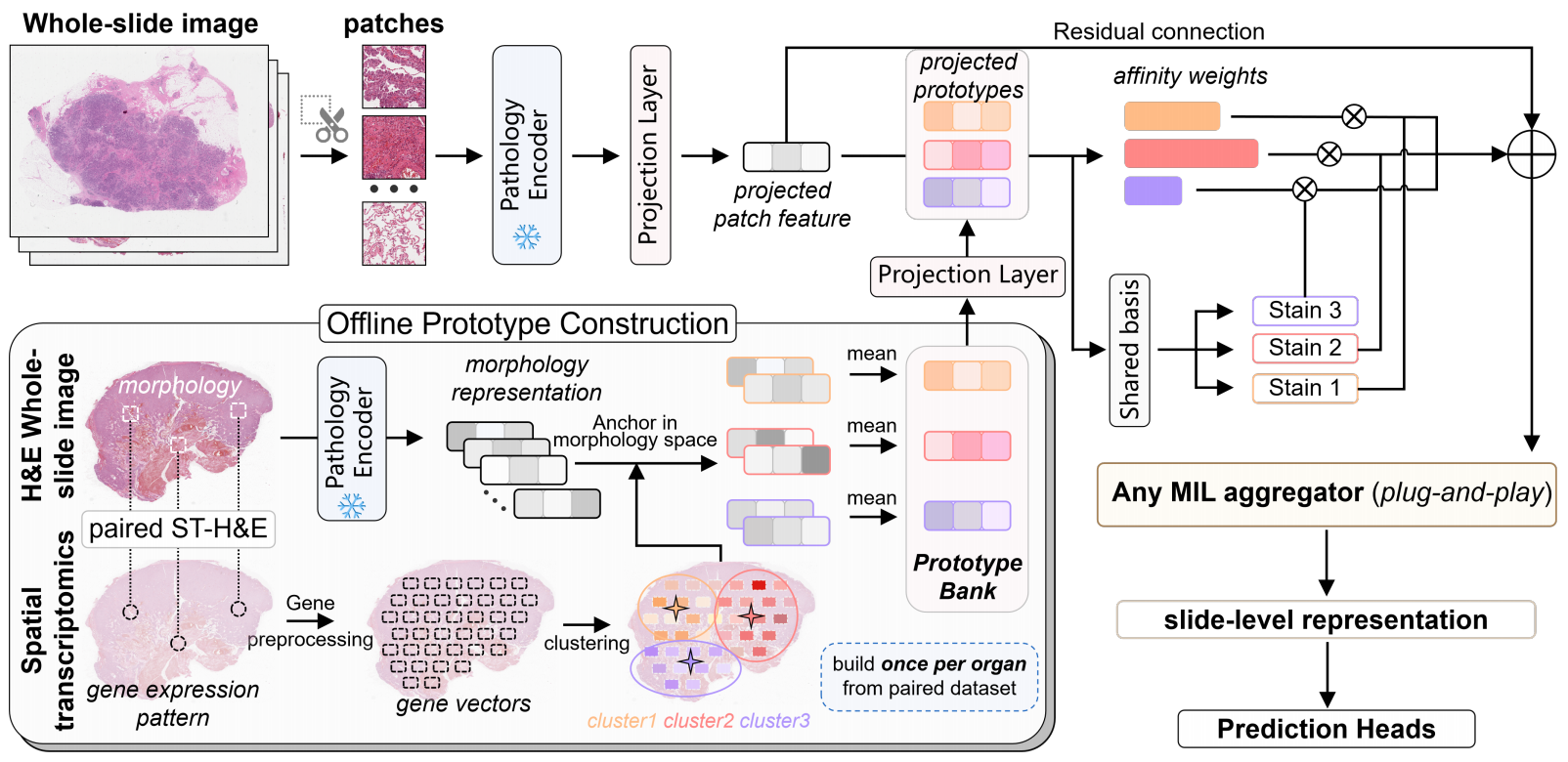
| Sep 30, 2026 | 📚 Invited to serve as Area Chair of ICLR 2027. 🎉 One co-authored paper, MIST (Bridging the modality bottleneck in pathology MIL through virtual molecular staining), is accepted by NeurIPS 2026. Congratulations to Yucheng. |
|---|---|
| May 7, 2026 |  Two co-authored papers, DPsurv (Dual-Prototype Evidential Fusion for Uncertainty-Aware and Interpretable Whole Slide Image Survival Prediction) and CAML (A Conflict-Aware Molecular Language Model Merging Framework for Multi-Constraint Molecular Generation), are accepted by ICML 2026 and ACL 2026. Congratulations to Yucheng and Xuanbai. Two co-authored papers, DPsurv (Dual-Prototype Evidential Fusion for Uncertainty-Aware and Interpretable Whole Slide Image Survival Prediction) and CAML (A Conflict-Aware Molecular Language Model Merging Framework for Multi-Constraint Molecular Generation), are accepted by ICML 2026 and ACL 2026. Congratulations to Yucheng and Xuanbai. |
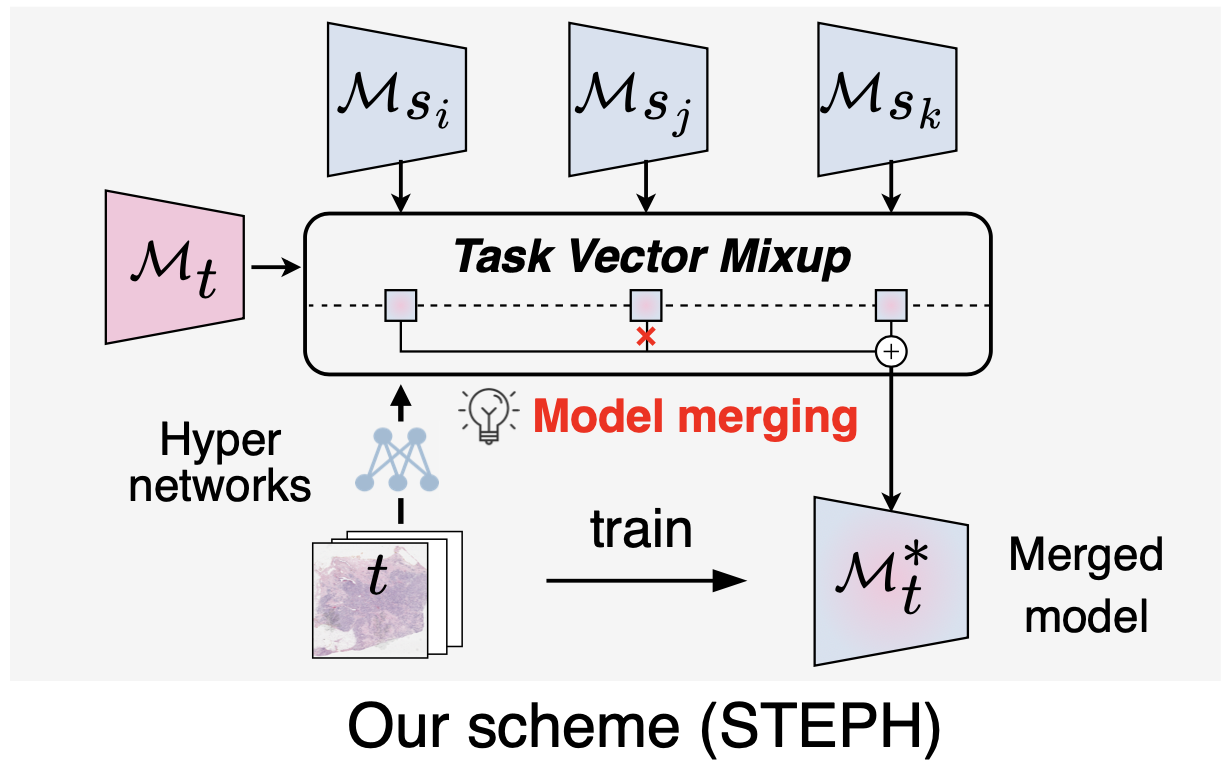
| Feb 21, 2026 | 🎉 Our work STEPH (Sparse Task Vector Mixup with Hypernetworks for Efficient Knowledge Transfer in Whole-Slide Image Prognosis) is accepted to CVPR 2026. As a continuation of CROPKT, this work presents an efficient solution: prognosis knowledge transfer via model merging. Please see our paper and code for more details. |
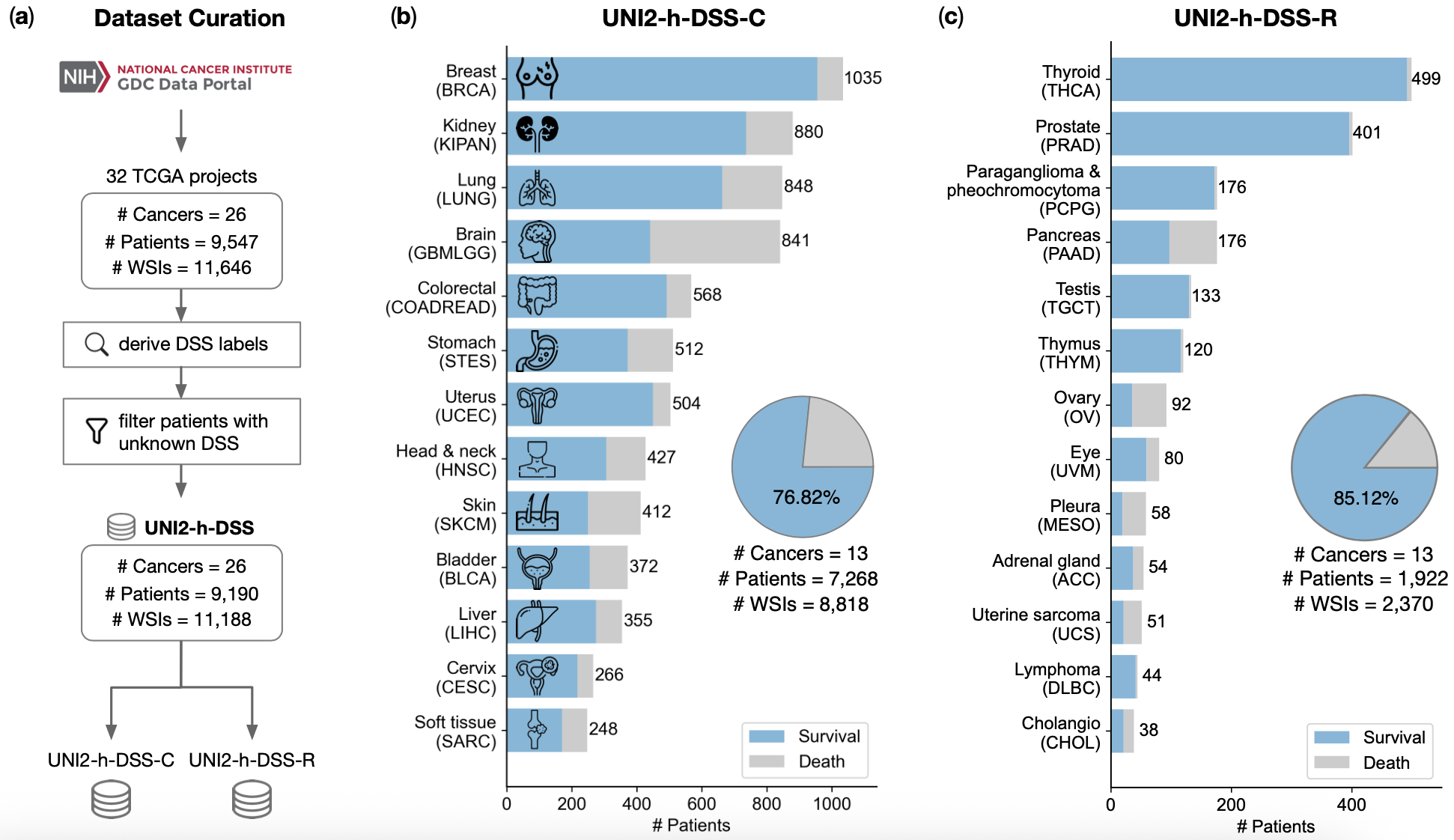
| Sep 25, 2025 | 📚 I am thrilled to announce our new work CROPKT: Cross-Cancer Knowledge Transfer in WSI-based Prognosis Prediction. This work presents the first preliminary yet systematic study on cross-cancer knowledge transfer in WSI-based prognosis prediction to gain deeper insights into cross-cancer knowledge transfer and show its utility in WSI-based prognosis. Paper interpretation can be found at Zhihu (Chinese version). Its source code, UNI2-h-DSS dataset, and arXiv paper have been released. |
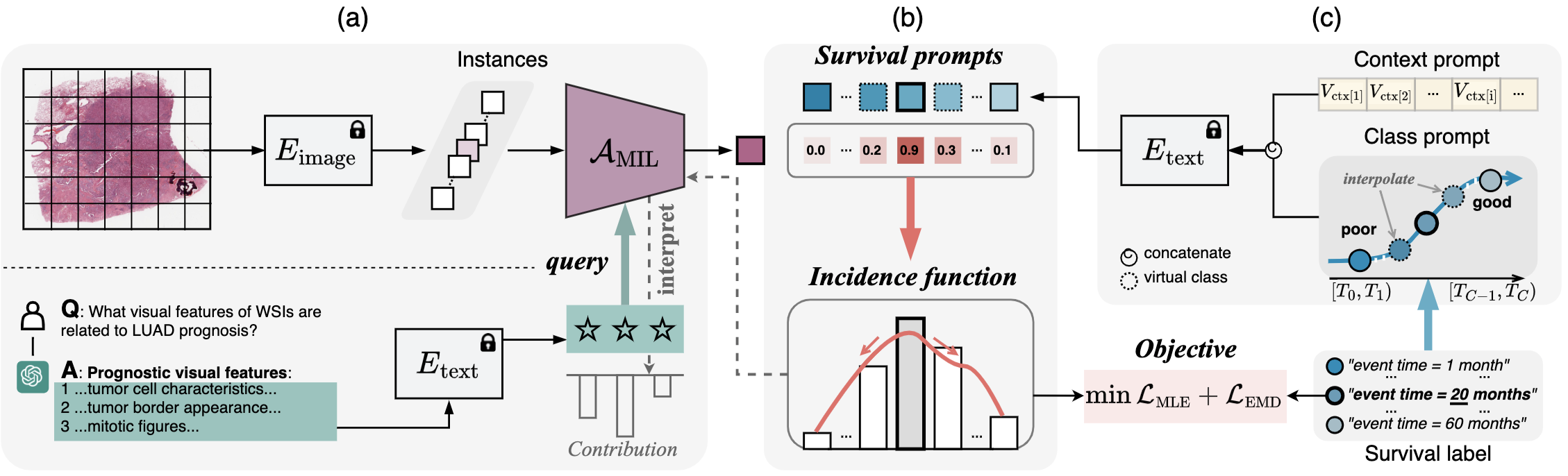
| Jan 23, 2025 | 🎉 Our recent work, VLSA, (Interpretable Vision-Language Survival Analysis with Ordinal Inductive Bias for Computational Pathology), is accepted to ICLR 2025. You can check its code and paper. For the interpretation of VLSA, please visit Zhihu (中文). |
| Jan 9, 2025 |  One co-authored paper, WSOE (Weakly Supervised Outlier Exposure for Object-level Out-of-distribution detection), is accepted by Expert Systems with Applications. Congratulations to Yutian Lei. One co-authored paper, WSOE (Weakly Supervised Outlier Exposure for Object-level Out-of-distribution detection), is accepted by Expert Systems with Applications. Congratulations to Yutian Lei. |
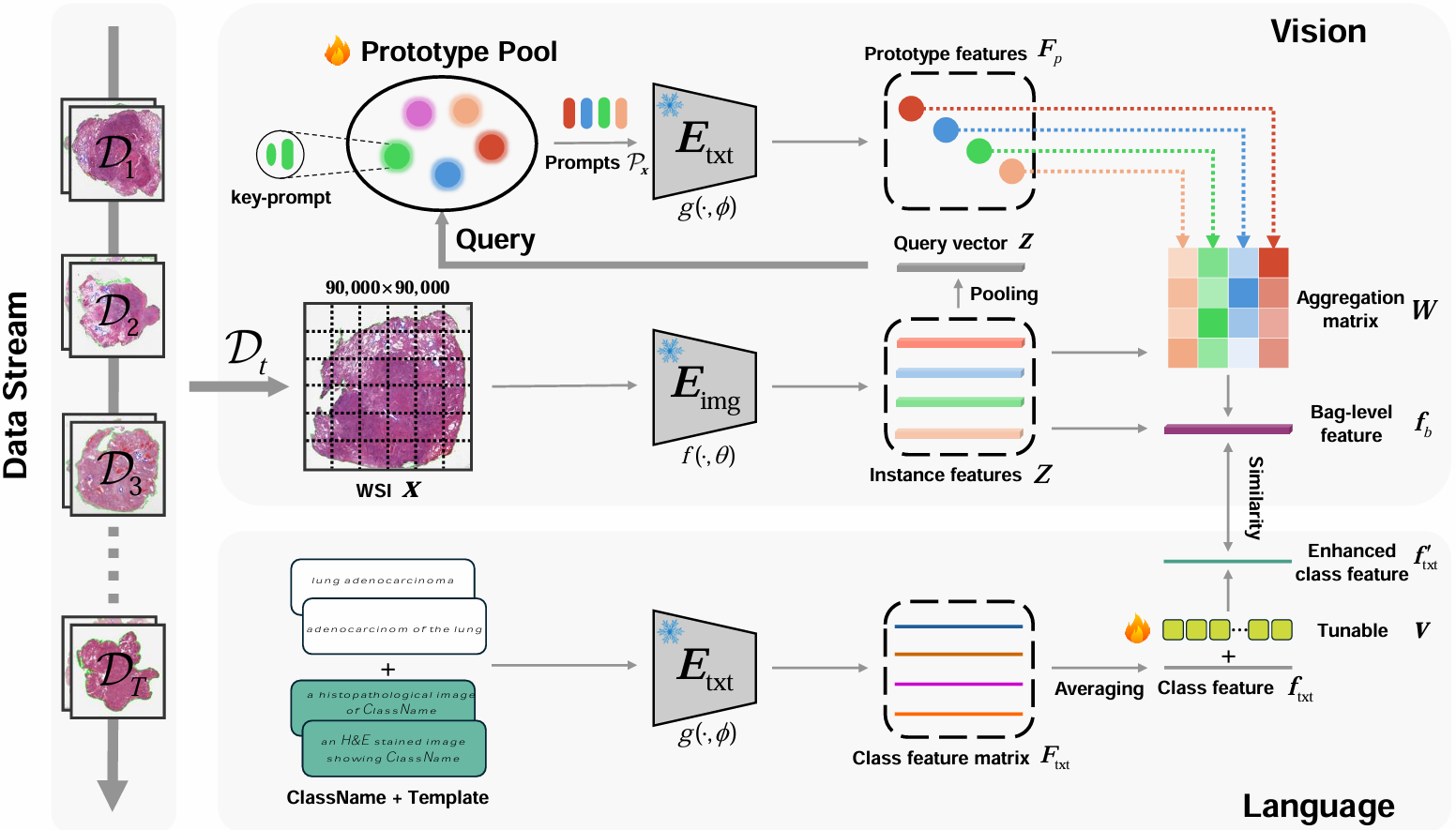
| Dec 10, 2024 | Two co-authored papers, QPMIL-VL (Queryable Prototype Multiple Instance Learning with Vision-Language Models for Incremental Whole Slide Image Classification) and MVOL (Mining In-distribution Attributes in Outliers for Out-of-distribution Detection), are accepted at AAAI 2025. Congratulations to Yutian Lei and Jiaxiang Gou. For QPMIL-VL, please check its arXiv preprint & Code. For MVOL, please check its arXiv preprint & Code. |
| Nov 5, 2024 | 🎉 Received Top Reviewer Award as a PC member of NeurIPS 2024. |
| Aug 27, 2024 | 📚 I am excited to share that our two latest works, VLSA (Vision-Language-based Survival Analysis) and QPMIL-VL (Vision-Language-based Incremental Learning) for Computational Pathology. For VLSA, please check Preprint, Github, and Zhihu (中文). For QPMIL-VL, please check Preprint. Stay tuned for updates! |
| May 2, 2024 | I am thrilled to announce that MIREL, Weakly-supervised Residual Evidential Learning for Multi-Instance Uncertainty Estimation, is accepted at ICML 2024. Please check our arXiv paper, Github, and Poster. |
| Mar 31, 2024 | ProDiv, Prototype-driven Pseudo-bag Division for WSI Classification, is accepted by Computer Methods and Programs in Biomedicine. |
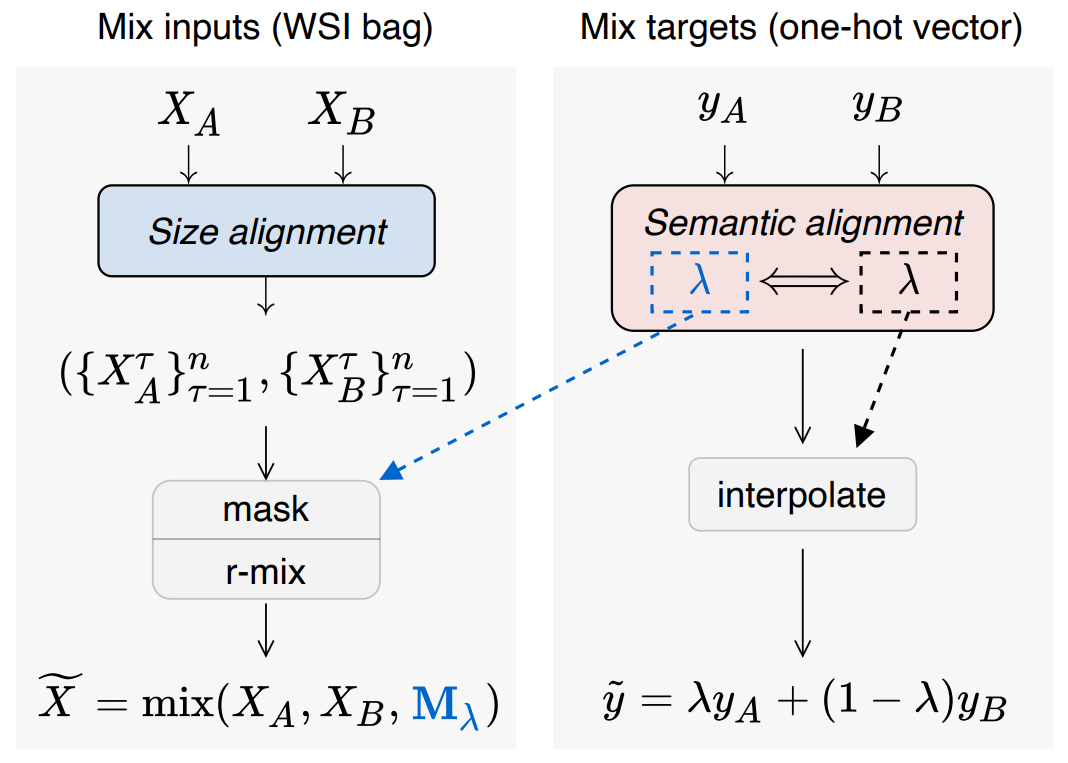
| Jan 3, 2024 | PseMix, Pseudo-bag Mixup Augmentation for WSI Classification, is accepted by IEEE Transaction on Medical Imaging. |
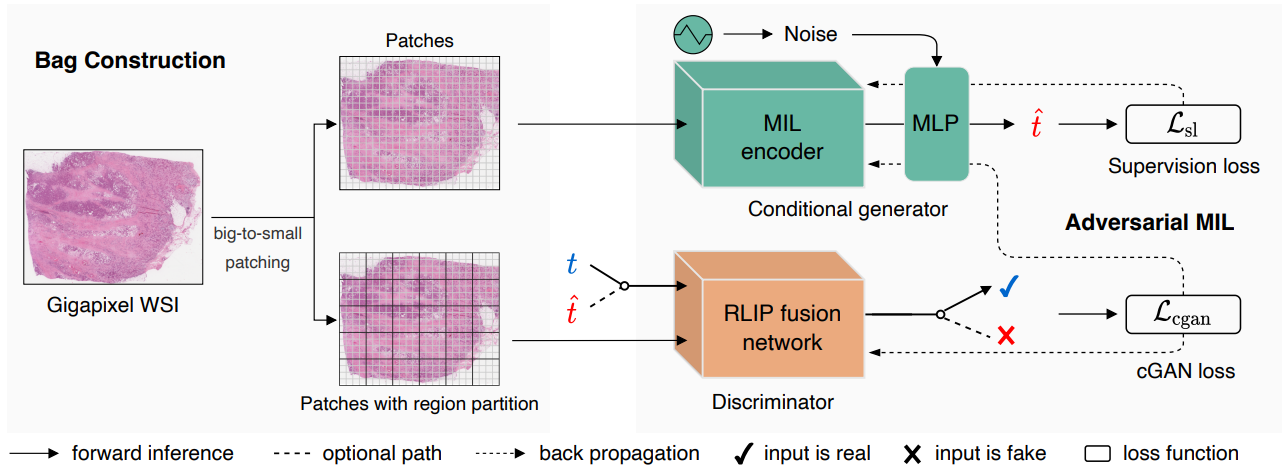
| Oct 31, 2023 | AdvMIL, Adversarial MIL for Survival Analysis on WSIs, is accepted by Medical Image Analysis. |